The Early Years:
Drawings and Paintings from the 1950s & 1960s
On View:
October 28 – December 19, 2026
Opening Reception:
Wednesday, October 28, from 6-8PM
Donald Ryan Gallery is pleased to present early works by Irving Petlin (1934–2018). This exhibition brings together charcoal drawings and paintings made during the 1950s and 1960s, the majority of which have never been shown.
Born in Chicago, Petlin enrolled in the School of the Art Institute of Chicago on a youth scholarship in 1947 and became a full-time student in 1952. He came of age as part of the Monster Roster, a generation of Chicago artists that included Leon Golub, June Leaf, Nancy Spero, and H. C. Westermann. After graduating from the Art Institute in 1956, Petlin pursued his MFA at Yale University, where he studied with Josef Albers. In 1957, while still enrolled at Yale, Petlin was drafted into the Army and stationed at the Presidio in San Francisco, where he continued to paint.
He completed his MFA and his military service in 1959 and joined Golub, Spero, and Leaf in Paris. There he studied French painting in depth, particularly the nineteenth-century Symbolism and Impressionism that he had first seen at the Art Institute. Roberto Matta, who had been Petlin’s professor in Chicago, introduced him to the Surrealist circles of Paris, where he encountered Balthus, Max Ernst and Alberto Giacometti, among others. In 1960, Petlin presented the first of four solo exhibitions at Galerie du Dragon.
Petlin emerges from his studies of art history unburdened by it, making pictures that are puzzling, singular, and new. His works recall Redon, Munch, van Gogh, and Cézanne. His own typology, however, unfolds from his memory of their work rather than through quotation. In 1 of 4 Sides of the Yellow Box (1960), a figure extends across the canvas, fragmented by a four-part structure that resembles a window frame. Against a nearly monochromatic yellow ground, the body is reduced to contours and forms, at moments barely recognizable. The painting itself operates as a memory, present but not entirely fixed.
The charcoal drawings gathered here reveal moments of freedom and experimentation in the artist’s development. Petlin pushed his Surrealism toward a more pragmatic and particularized terrain. In The Jewess (1959), a seated figure wearing a patterned cloak appears before a doorway as a shadow-like form sits beside her. The power of these drawings comes from their provocative sense of specificity. Strange and imagined scenes become recognizable, if only for a fleeting moment, and give the work a distinct social and psychological charge.
This specificity is also present in Lear on the Beach (1955). Here, Petlin turned to Shakespeare’s King Lear for the first known time, a subject he returned to throughout his life. In Lear, Petlin finds a character stripped of power and worldly identity. The bent figure at left is absorbed into the cliffs and water, as the distinction between figure and landscape dissolves. Petlin gives form to the often invisible forces that structure human experience: vulnerability, uncertainty, and belonging. Myth is something to be retraced and dissected, its familiar narratives opened to the pressures of the present.
Petlin presented solo exhibitions throughout North America and Europe, including at the Palais des Beaux-Arts, Brussels; Odyssia Gallery, New York and Rome; Marlborough Fine Art, London and New York; Jan Krugier Gallery, New York and Geneva; and Kent Fine Art, New York. He participated in the Paris Biennale in 1961, received a Guggenheim Fellowship in 1970, and was included in the Whitney Biennial in 1973 and the Venice Biennale in 1982. Petlin taught painting and drawing at UCLA, Cooper Union in New York, and the Pennsylvania Academy of the Fine Arts in Philadelphia. His work is held in more than thirty public collections worldwide, including the Museum of Modern Art, the Metropolitan Museum of Art, the Whitney Museum of American Art, the Art Institute of Chicago, the Jewish Museum, the Hirshhorn Museum and Sculpture Garden, and the Centre Pompidou. Petlin’s work is represented in Europe by Ditesheim & Maffei Fine Art in Neuchâtel.
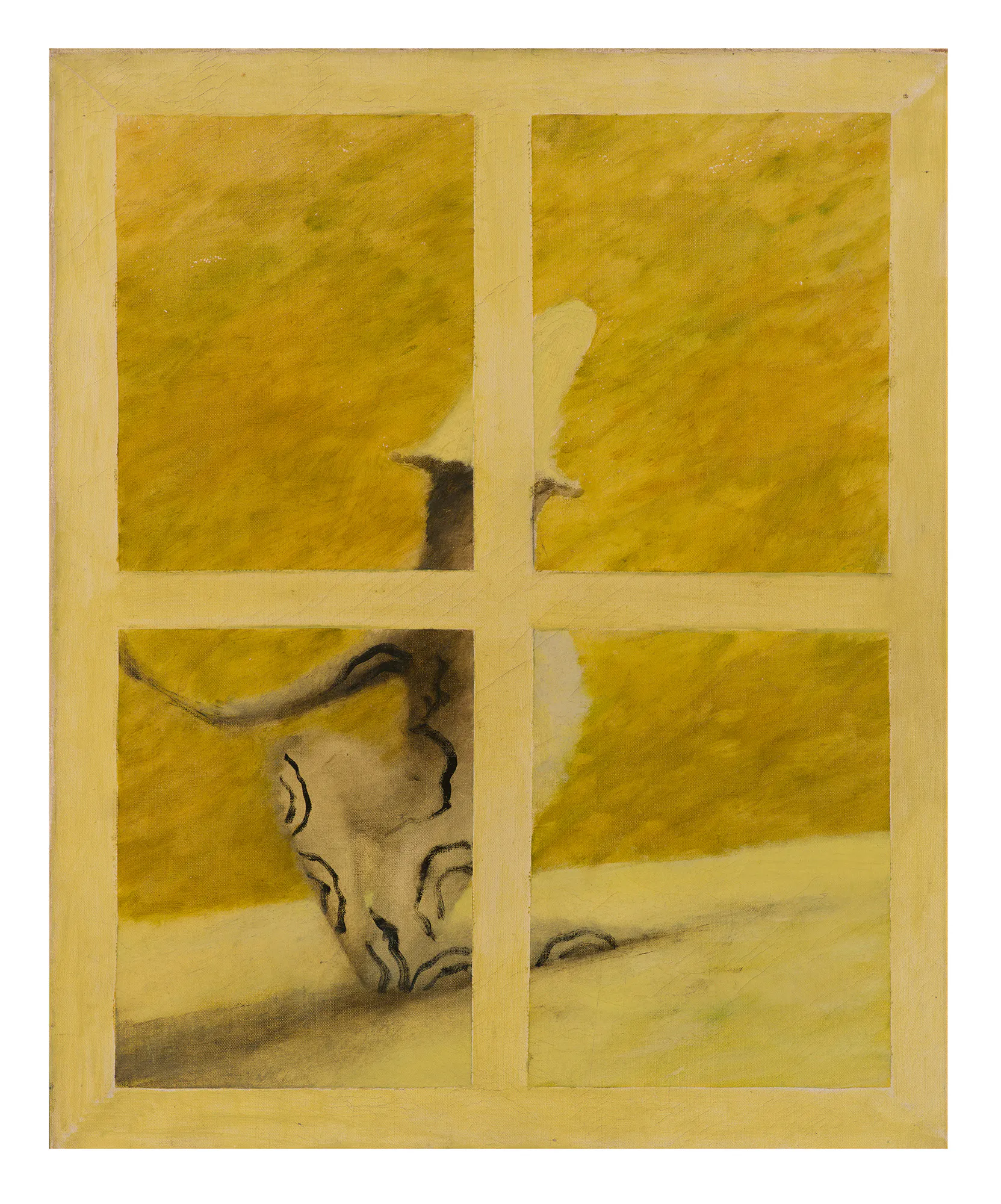
Irving Petlin
1 of 4 Sides of the Yellow Box, 1960
Oil on canvas
23.8 × 19.6 in (60.5 × 49.7 cm)
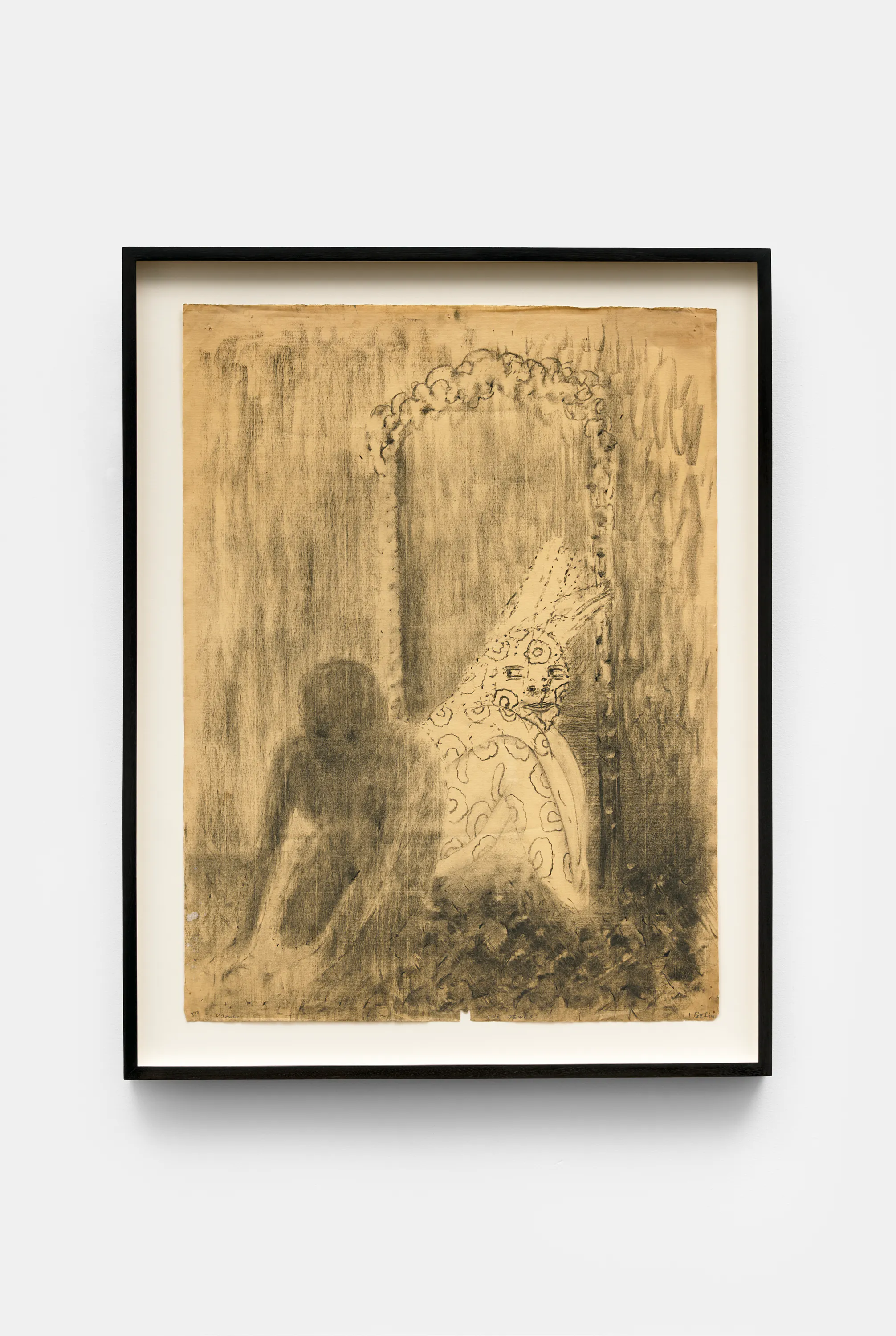
Irving Petlin
The Jewess, 1959
Charcoal and pencil on paper
22 × 17½ in (55.9 × 44.5 cm)
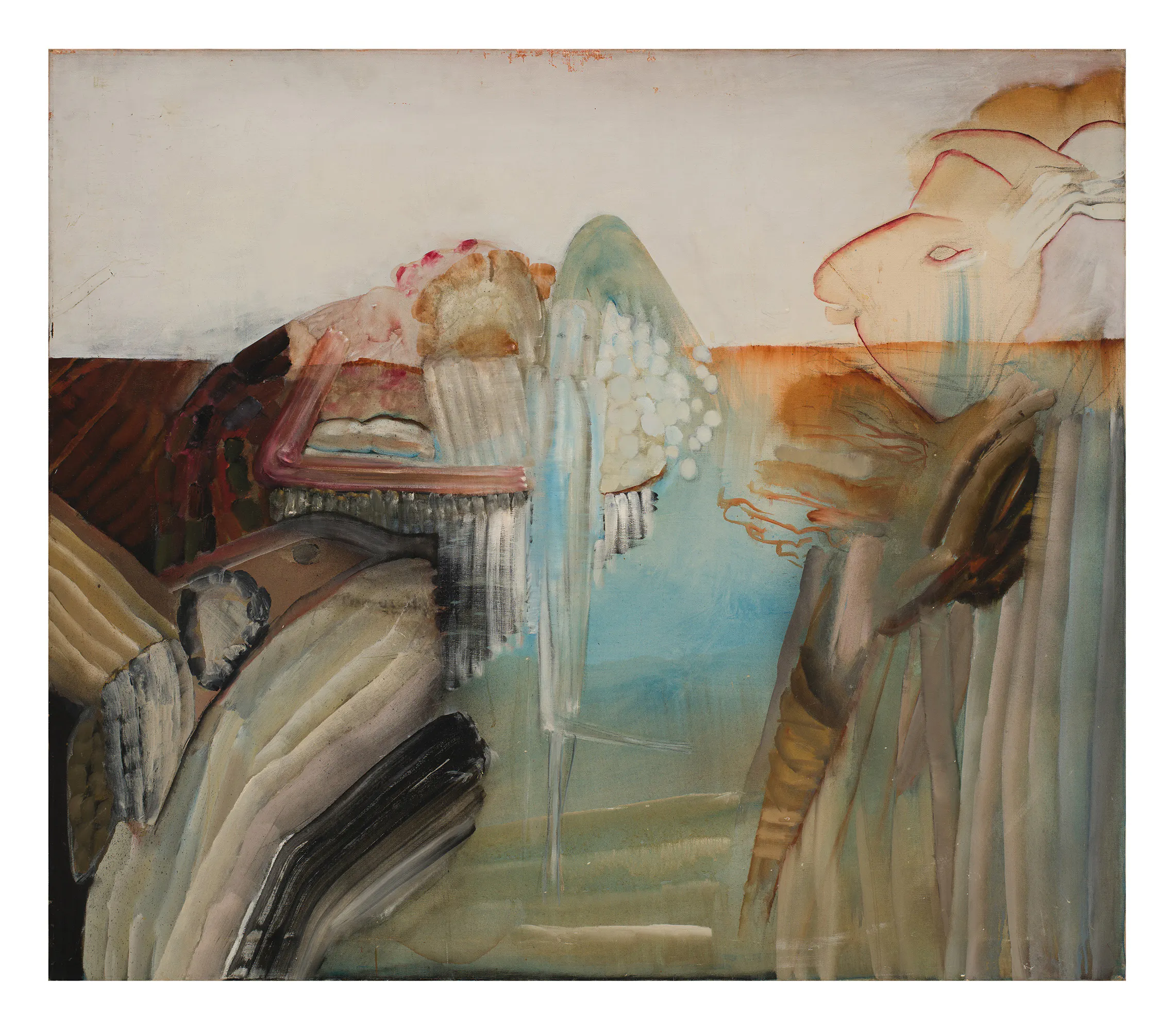
Irving Petlin
Lear on the Beach, 1955
Oil on canvas
38 × 43⅞ in (96.5 × 111.5 cm)
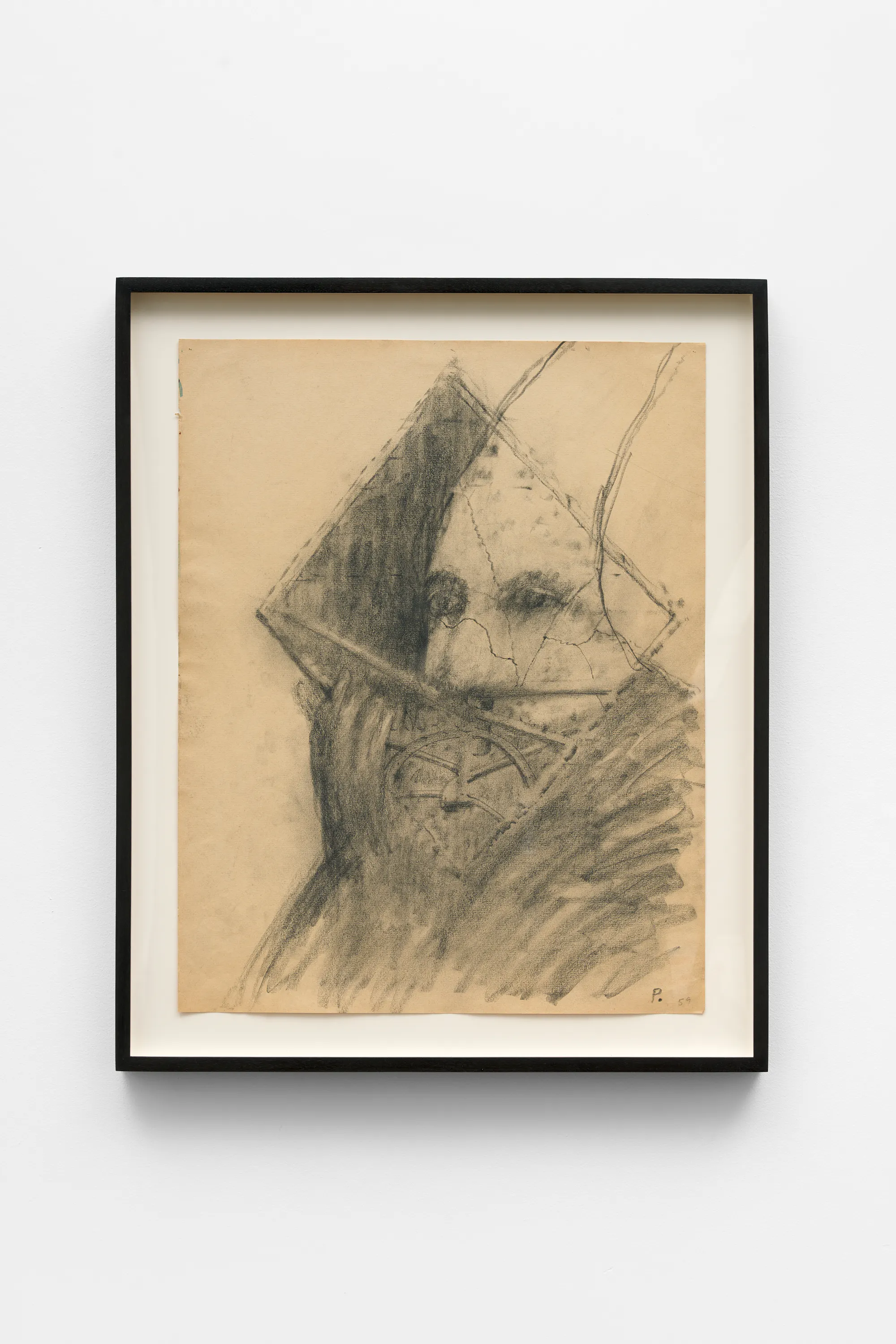
Irving Petlin
Navigator Head II, 1959
Charcoal and pencil on paper
22 × 17½ in (55.9 × 44.5 cm)
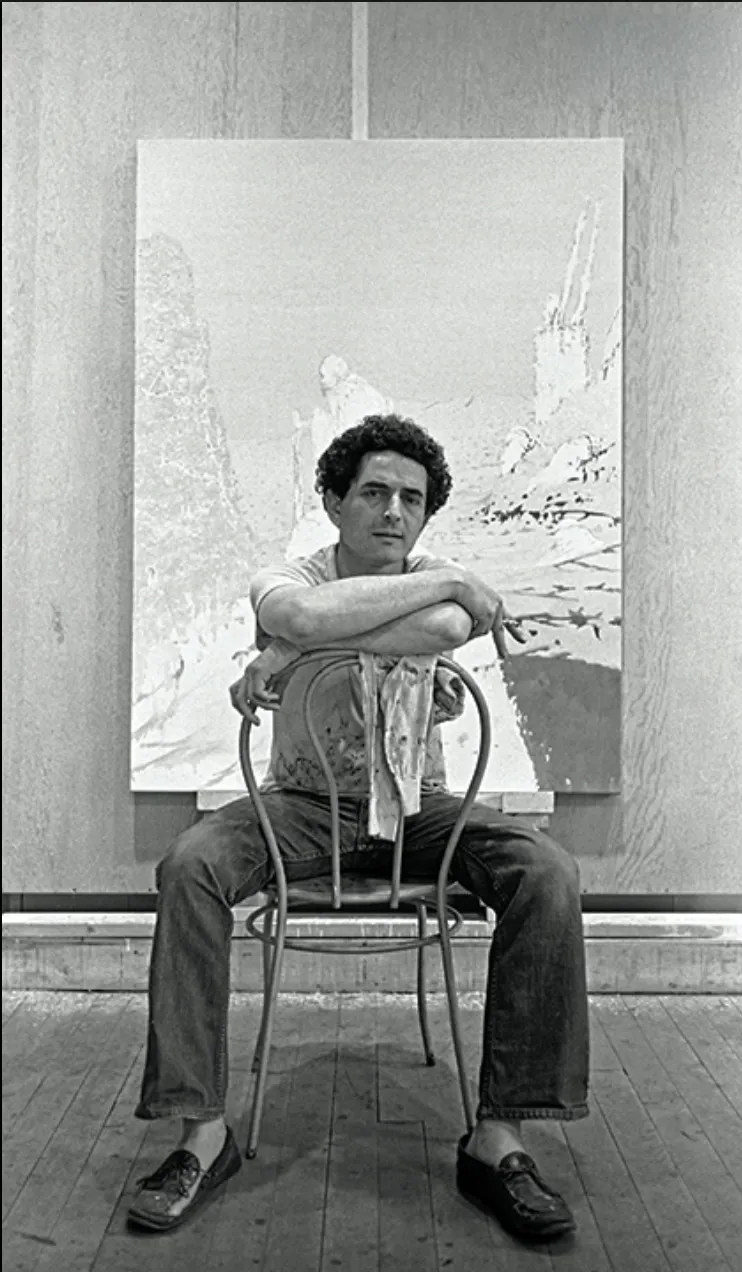
Irving Petlin (1934–2018) was born in Chicago and studied at the School of the Art Institute of Chicago before completing his MFA at Yale University, where he studied with Josef Albers. Influenced by artists including Edvard Munch, Vincent van Gogh, and Odilon Redon, Petlin developed a highly personal figurative language informed by Symbolism, literature, music, and history.
In 1959, Petlin moved to Paris, where he became associated with artists including Alberto Giacometti, Balthus, Max Ernst, Roberto Matta, and Maryan. He exhibited at Galerie du Dragon and participated in Nouvelle Figuration II at Galerie Mathias Fels in 1962. He received a Guggenheim Fellowship in 1970 and went on to exhibit extensively throughout Europe and the United States, including with Marlborough Gallery, Jan Krugier Gallery, Kent Fine Art, and Ditesheim & Maffei Fine Art.
Working across painting, drawing, and pastel, Petlin explored themes of memory, mythology, and the human condition. His work frequently drew upon literature and historical experience, engaging with questions of identity, vulnerability, and the relationship between personal and collective memory. Petlin died in Martha’s Vineyard in 2018.

