Works from the 1970s and 1980s
On View:
January 22 – March 7, 2026
Opening Reception:
Thursday, January 22, 6-8PM
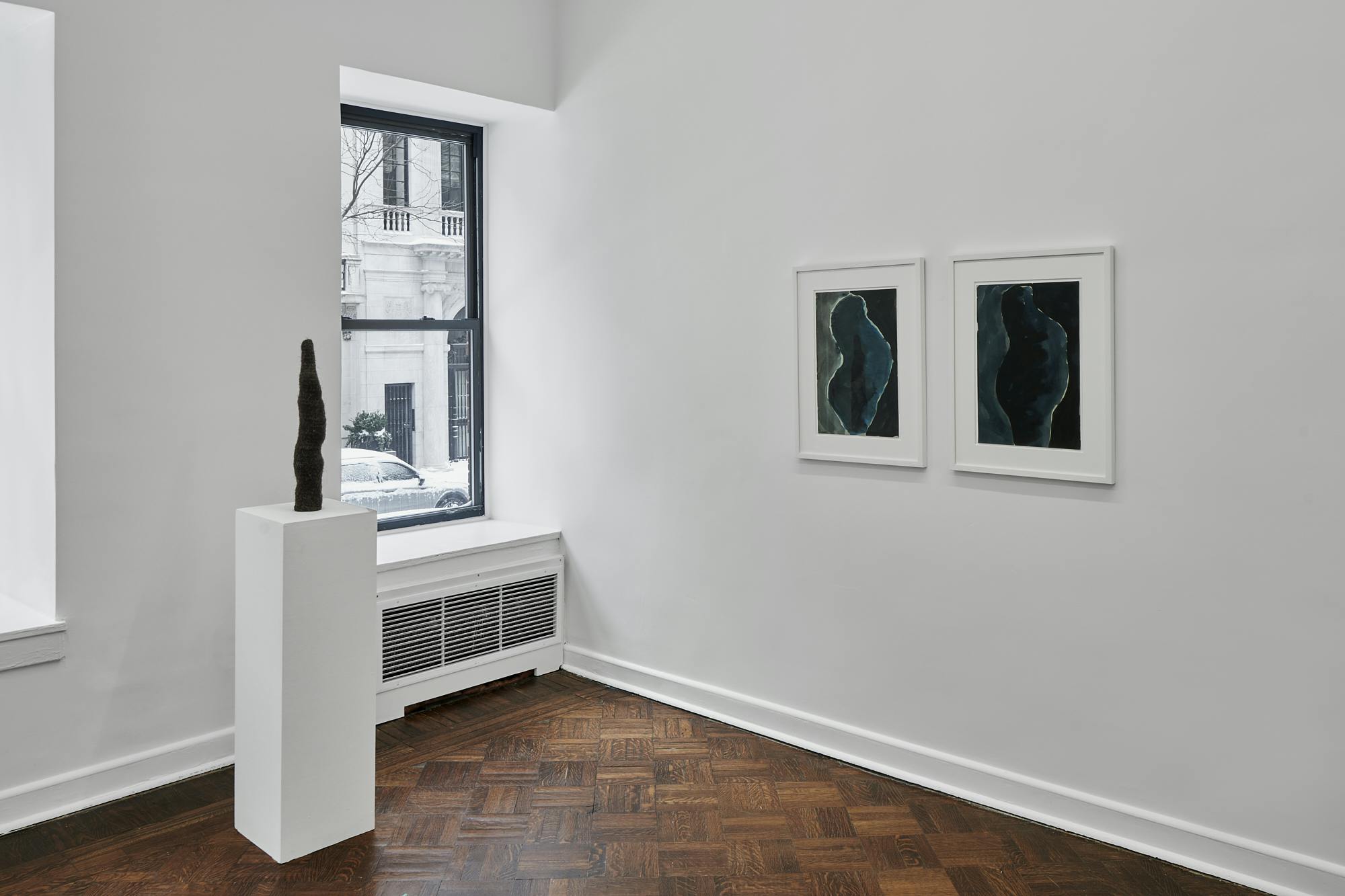
Donald Ryan Gallery is pleased to present an exhibition of works by Leslie Bohnenkamp (1943 – 1997), an American artist whose sculptural and drawing practices developed in the 1970s at the intersection of postwar abstraction, craft, and gender politics.
Born in West Point, Iowa, Bohnenkamp served in the U.S. Navy before earning a master’s degree in textile design from the University of Iowa. In the early 1970s he was awarded a fellowship at the Fine Arts Work Center in Provincetown, a formative period during which his work shifted decisively toward sculpture.
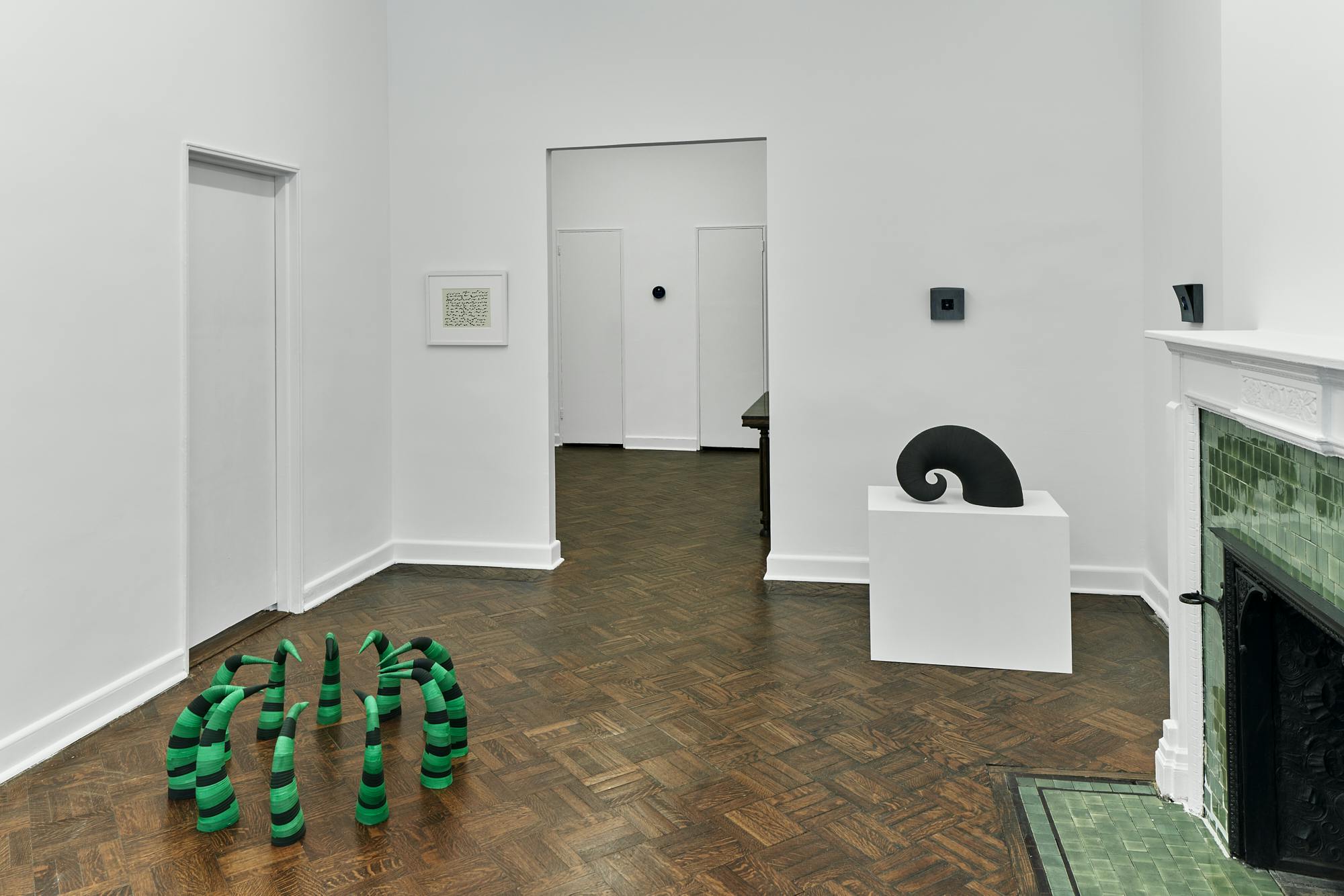
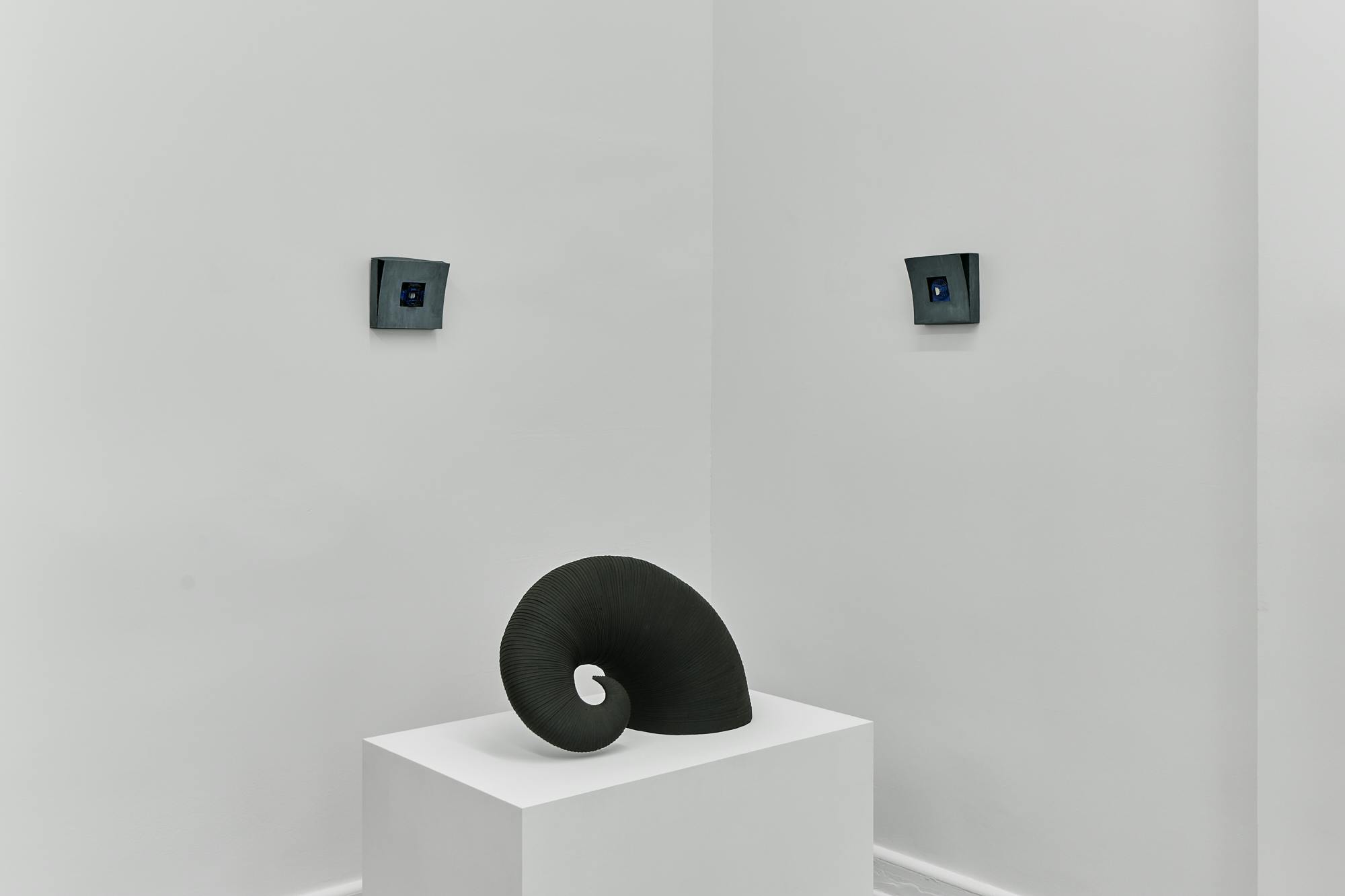
After moving to New York in 1975, Bohnenkamp encountered large quantities of discarded rolls of heavyweight paper on the sidewalk outside a SoHo belt manufacturer, where the material was used as industrial backing.He began working with the paper by hand, and it soon became a central material in his practice. Like many Minimalist artists of the period, he drew directly from the industrial fabric of downtown New York. Yet where Minimalism often translated such encounters into monumentality and finish, Bohnenkamp redirected an industrial castoff, through sustained hand labor, into forms marked by corporal presence, contingency, and humor.
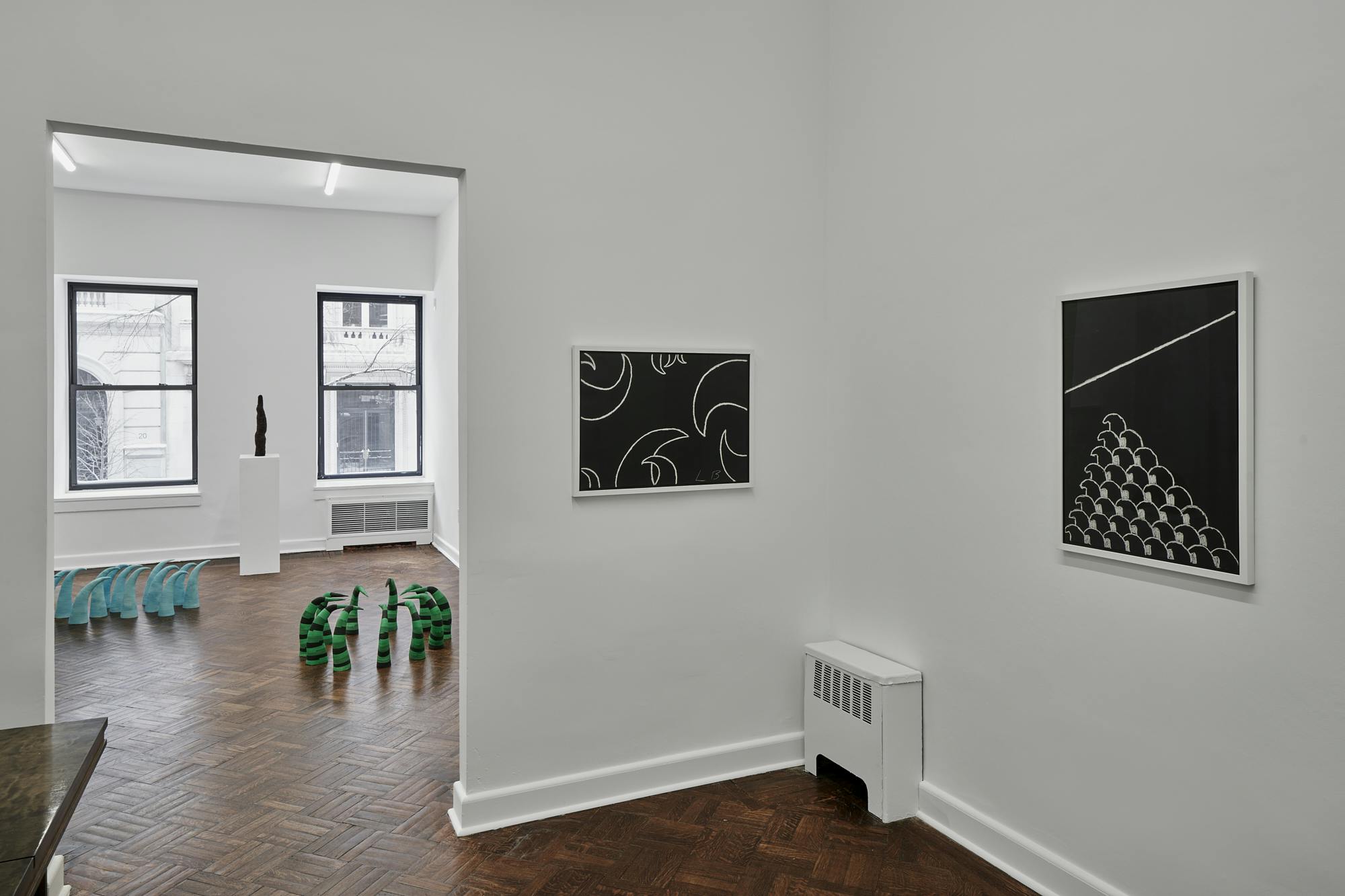
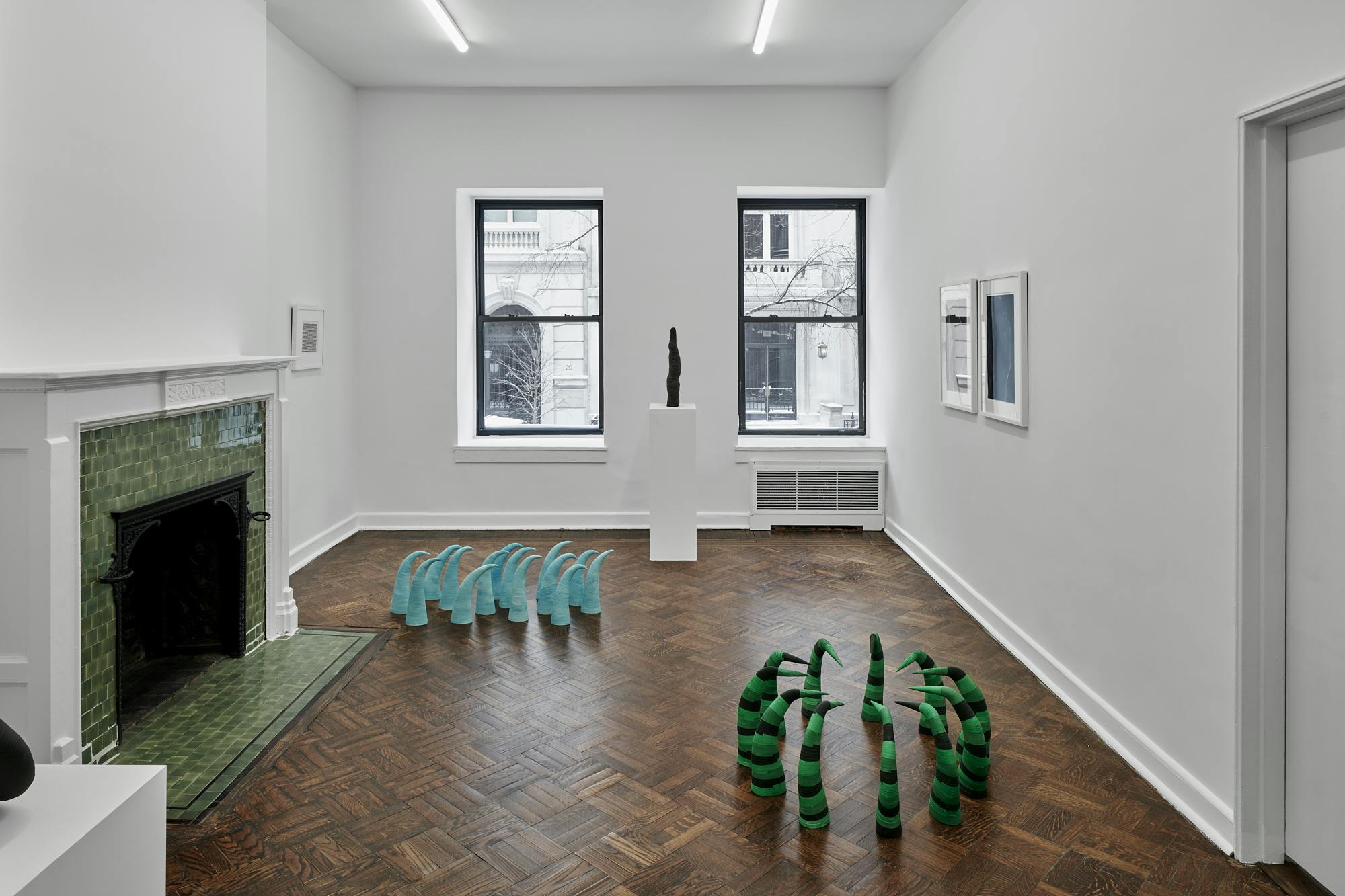
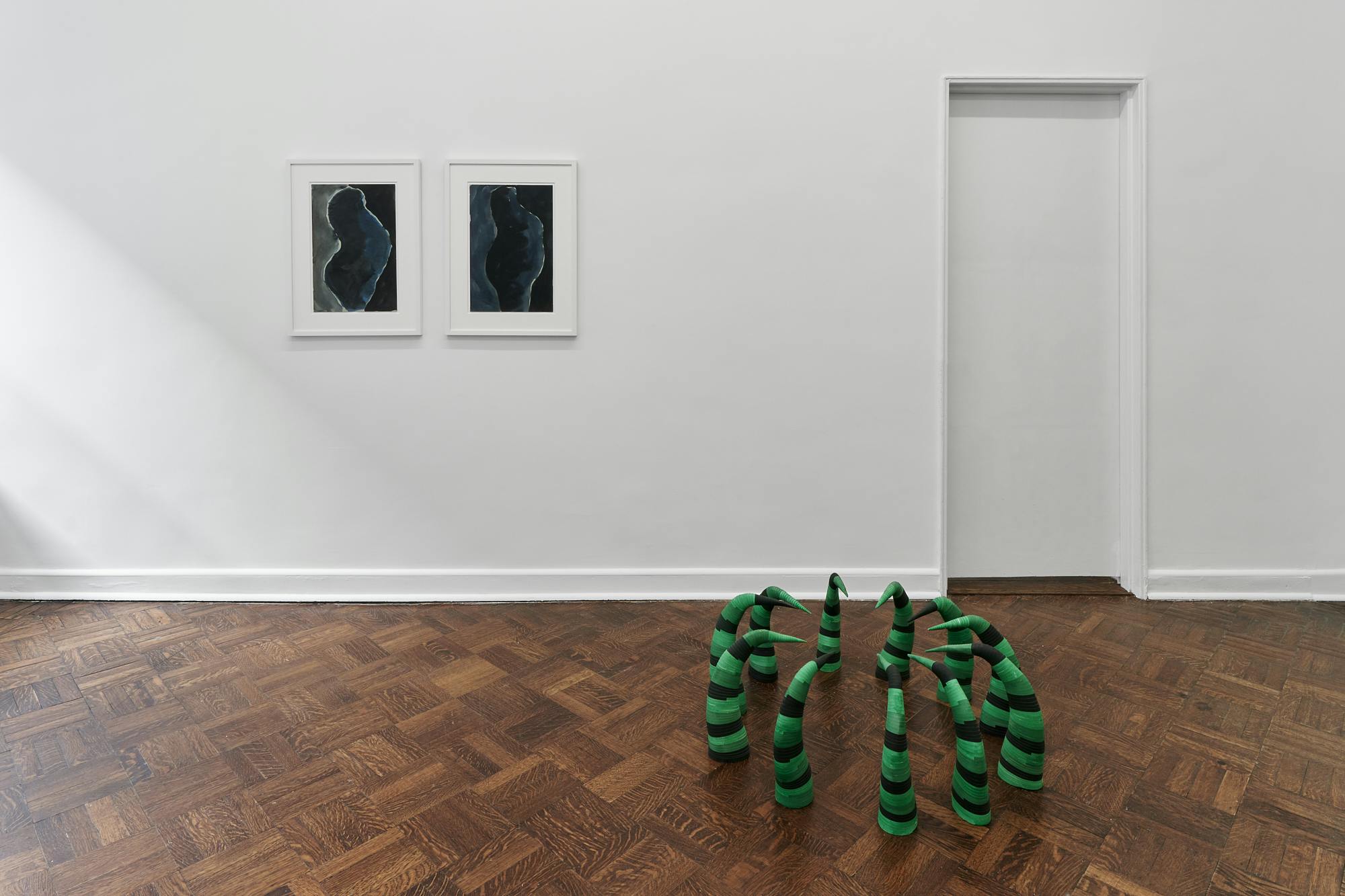
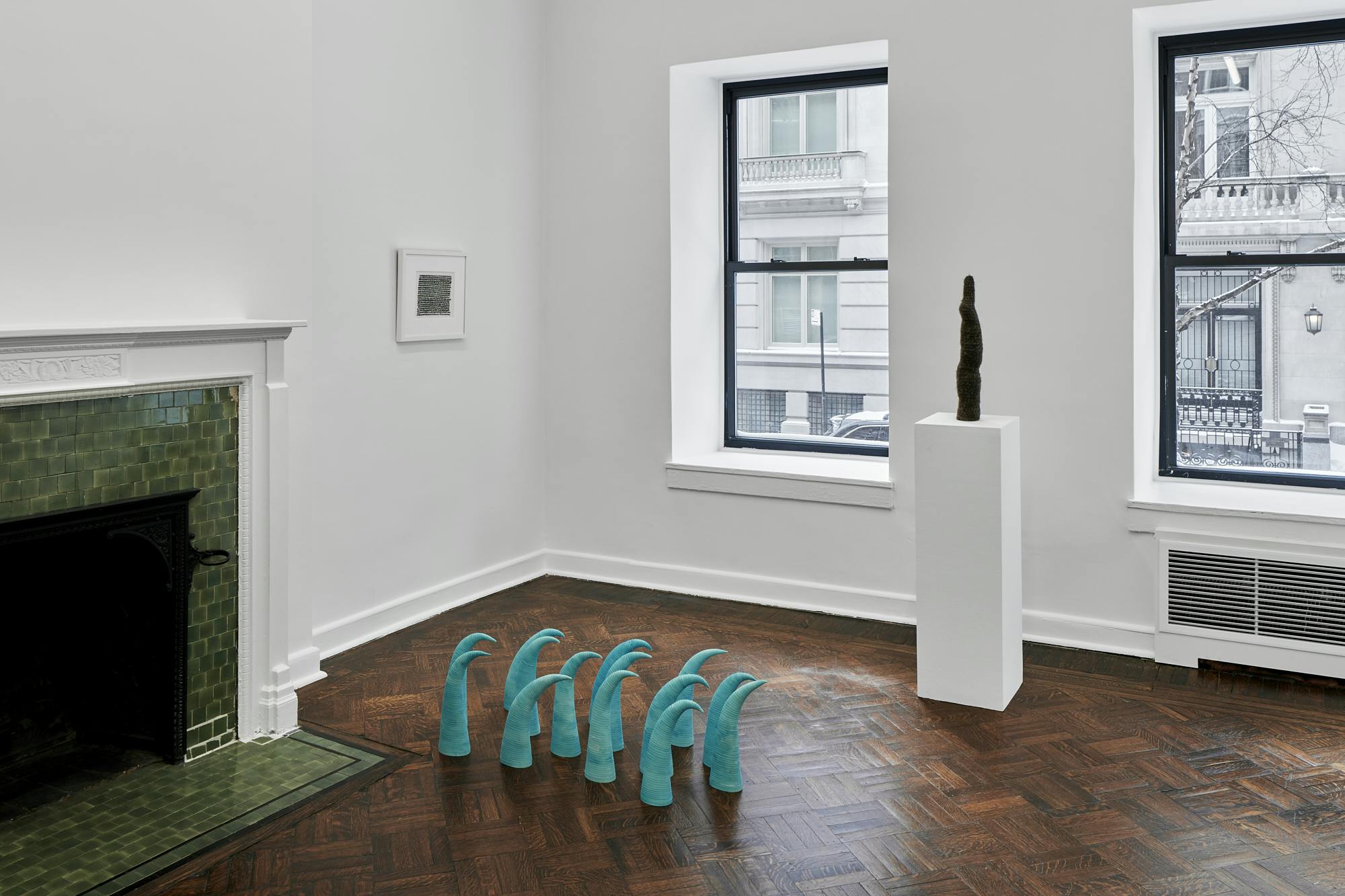
In the Herds series, Bohnenkamp gathers numerous small, near-identical paper forms into dense clusters. Through repetition, scale, and exoskeletal-like surfaces, the works evoke organic and bodily structures formed through growth and accretion rather than assembly. The groupings recall the childhood experience where inanimate objects are anthropomorphized through imagination, hovering between recognition and invention. The forms feel plausible without corresponding to anything identifiable. Behaving like bodies, they appear to sag, cluster, and hold themselves together, activating a physical awareness grounded in weight, instability, and touch. Meaning registers gradually across the group through accumulation and proximity.
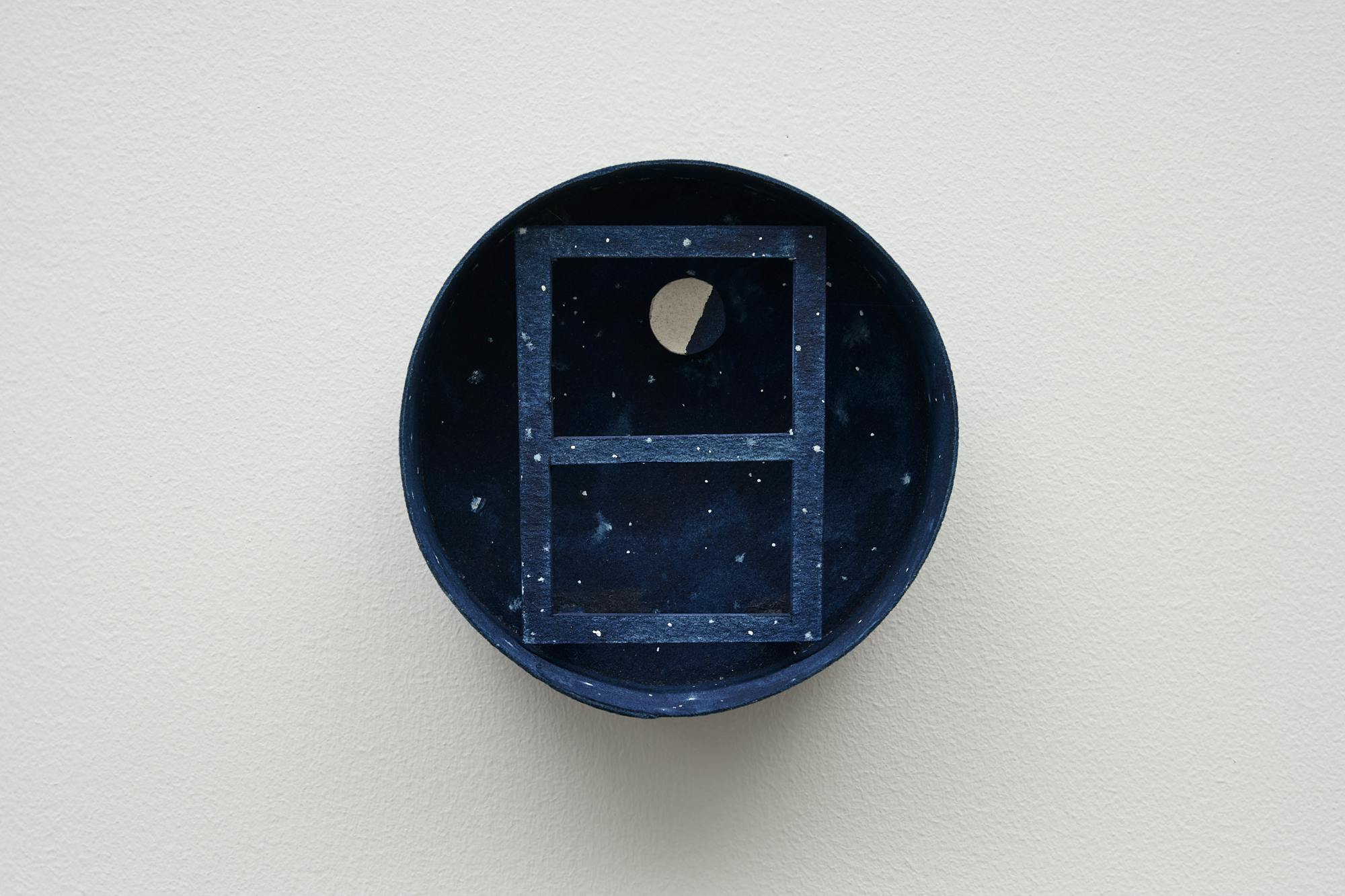
There is an innocent and childlike sense of wonder toward nature in Bohnenkamp’s work. In his paper constructions, he creates three-dimensional views of the moon, seen as if through a bedroom window. The moon appears distant, small, and often fractured, present as something visible but not possessed, held at a remove rather than resolved into meaning. In these works, minimalism and childlike thought draw close to one another, intersecting at the level of essence where reduction does not assert authority but loosens it. What comes into view is a mode of attention oriented toward potential.
During the 1970s, Bohnenkamp exhibited in New York, including a 1976 exhibition at the Betty Parsons Gallery and a monographic presentation of his paper sculptures in 1979. His work later receded from view following an accident that limited his ability to continue working at the same scale and intensity. This exhibition offers an opportunity to reconsider Bohnenkamp’s contribution within broader histories of postwar sculpture and material practice.
Leslie Bohnenkamp
Moon, Night and Window, 1979
Acrylic and craft paper
4 1/2 in. diameter (11.4 cm diameter)
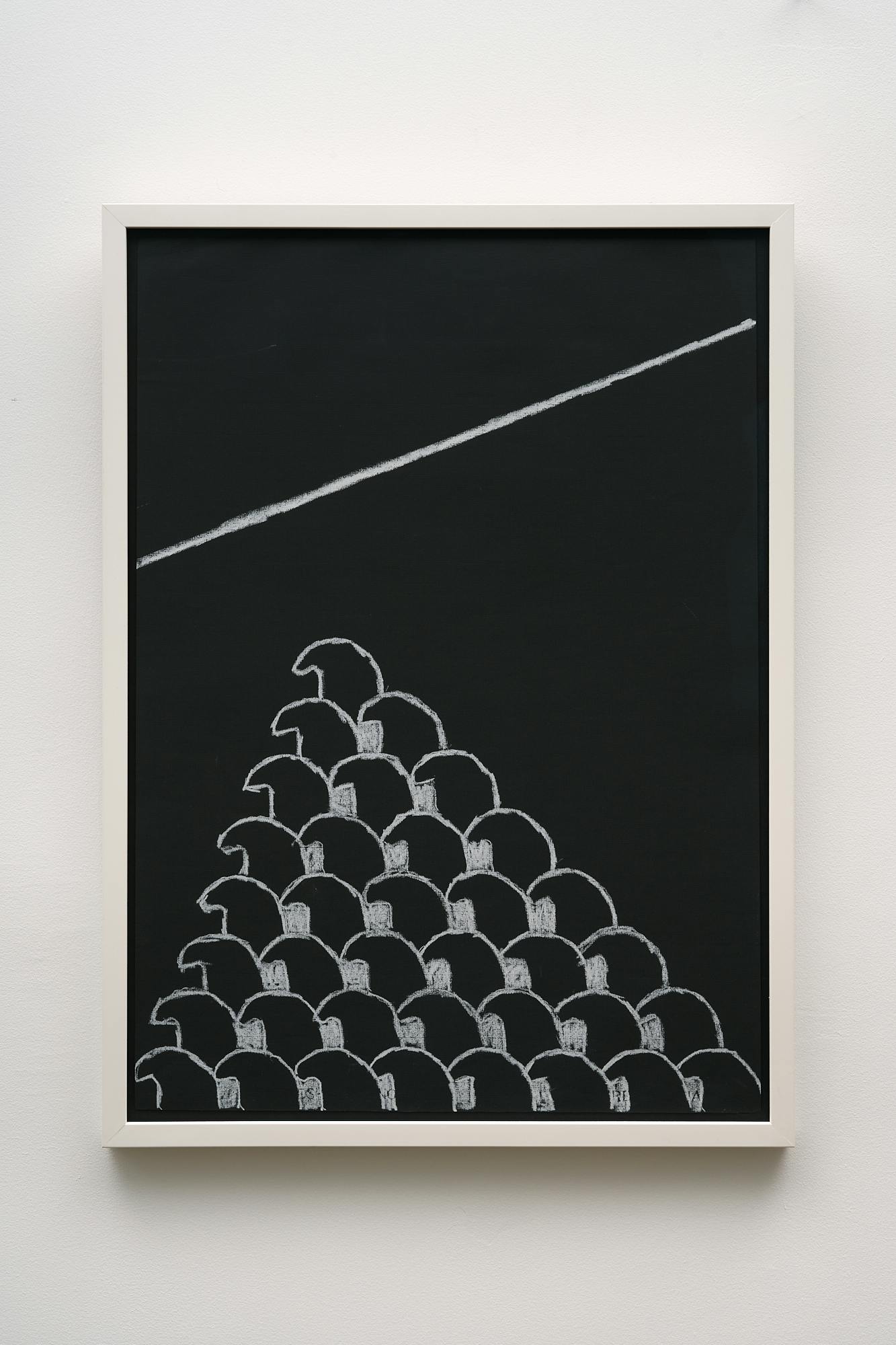
Leslie Bohnenkamp
Shell Herd Drawing, c. 1979
Chalk on paper
19.5 × 28 in. (49.5 × 71.1 cm); framed: 22 3/4 × 29 3/4 in. (57.8 × 75.6 cm)
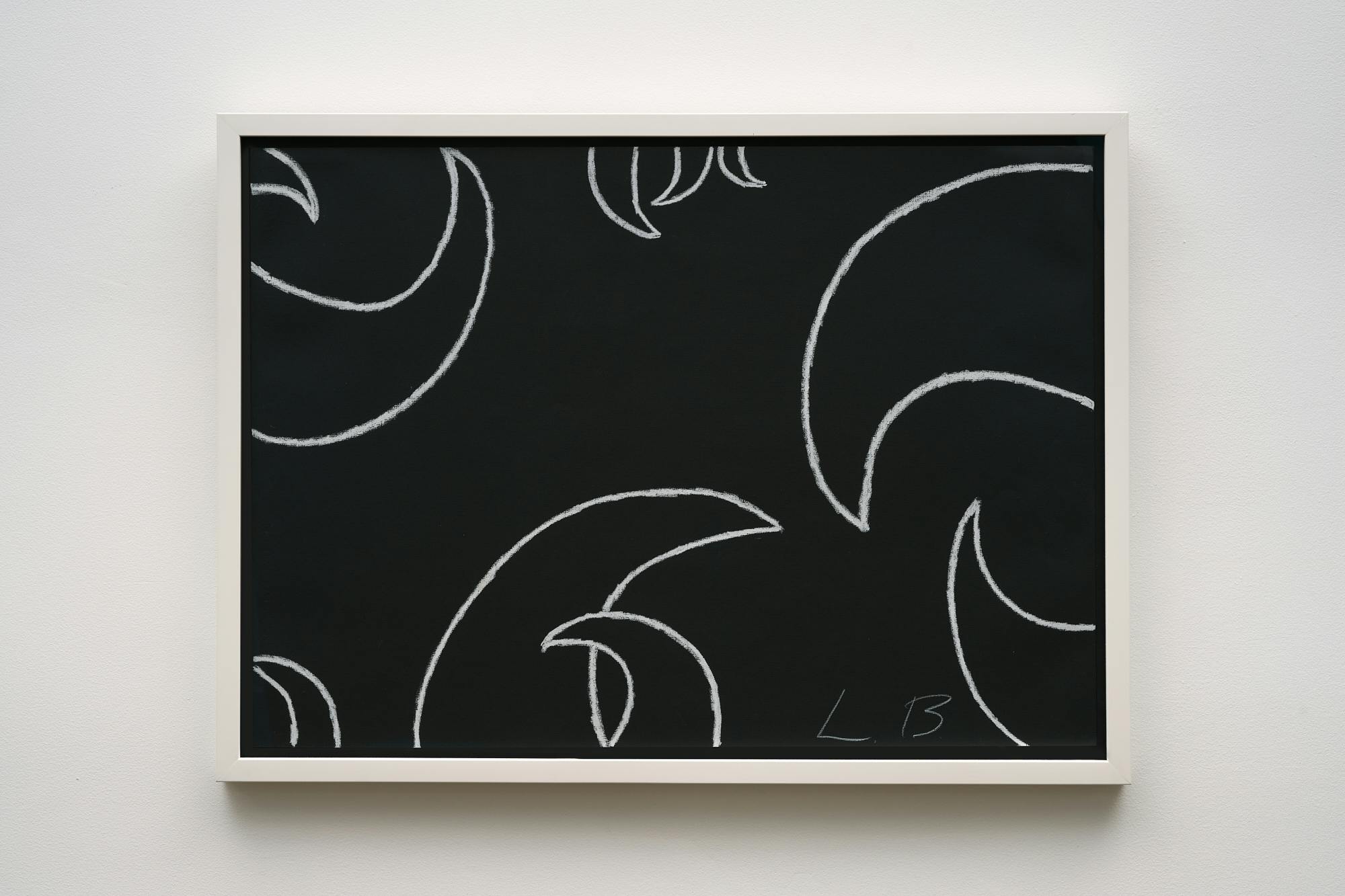
Leslie Bohnenkamp
Shell Herd Drawing, c. 1979
Chalk on paper
27 × 19 in. (68.6 × 48.3 cm); framed: 29 3/4 × 21 3/4 × 1 1/4 in. (75.6 × 55.2 × 3.2 cm)
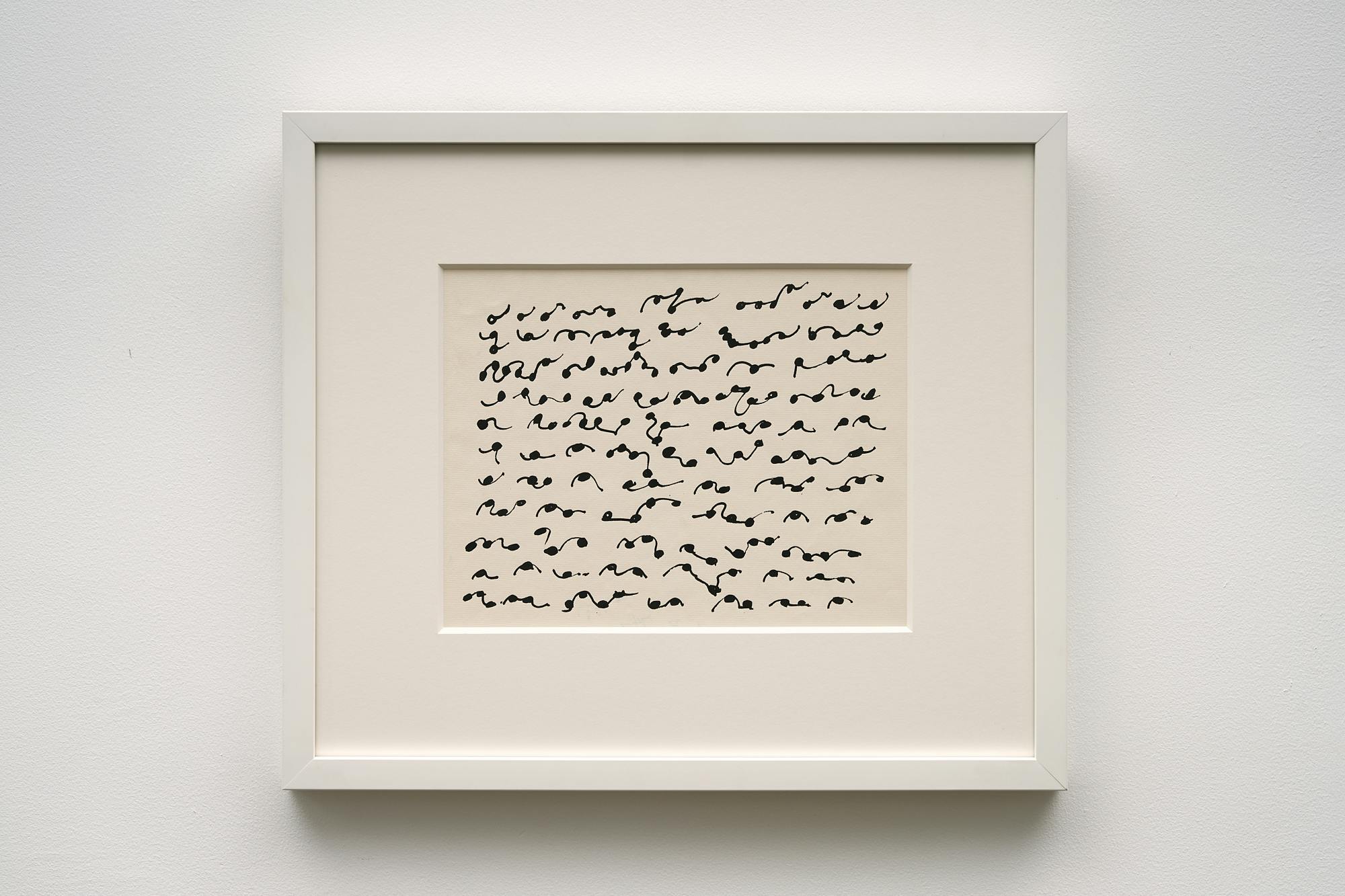
Leslie Bohnenkamp
Knotted Loops and Letters, c.1979
Ink on paper
11 × 8.5 in. (27.9 × 21.6 cm); framed: 18.5 × 16 in. (47.0 × 40.6 cm)
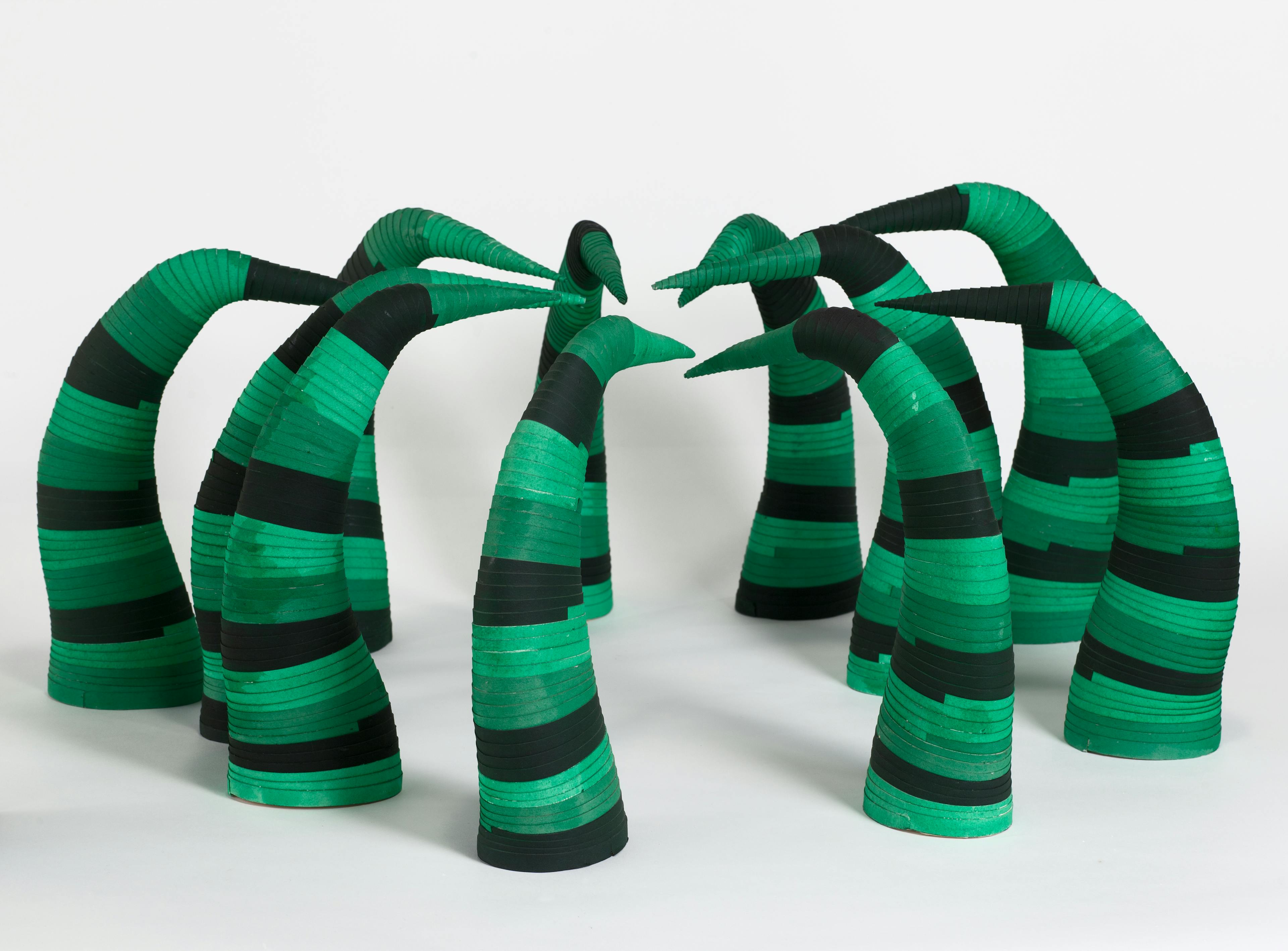
Leslie Bohnenkamp
Green and Black Herd, c.1976
Watercolor on coiled paper
Dimensions variable; comprised of 11 sculptures, each approximately 12.5 × 3.5 × 12 in. (31.8 × 8.9 × 30.5 cm)
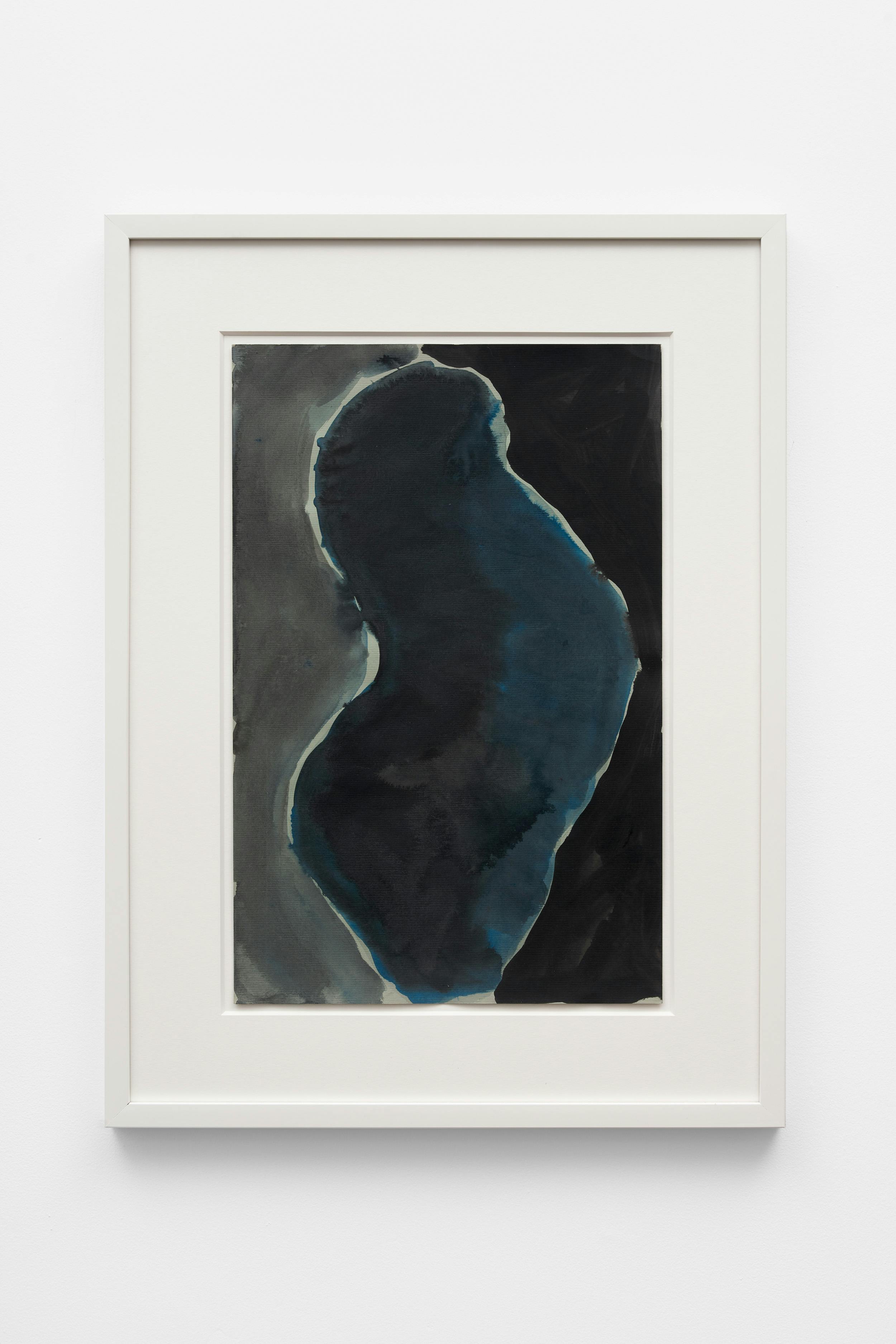
Leslie Bohnenkamp
Untitled (Horsehair), 1981
Watercolor on paper
13 × 19 1/2 in. (33 × 49.5 cm); framed: 21 × 28 in. (53.3 × 71.1 cm)
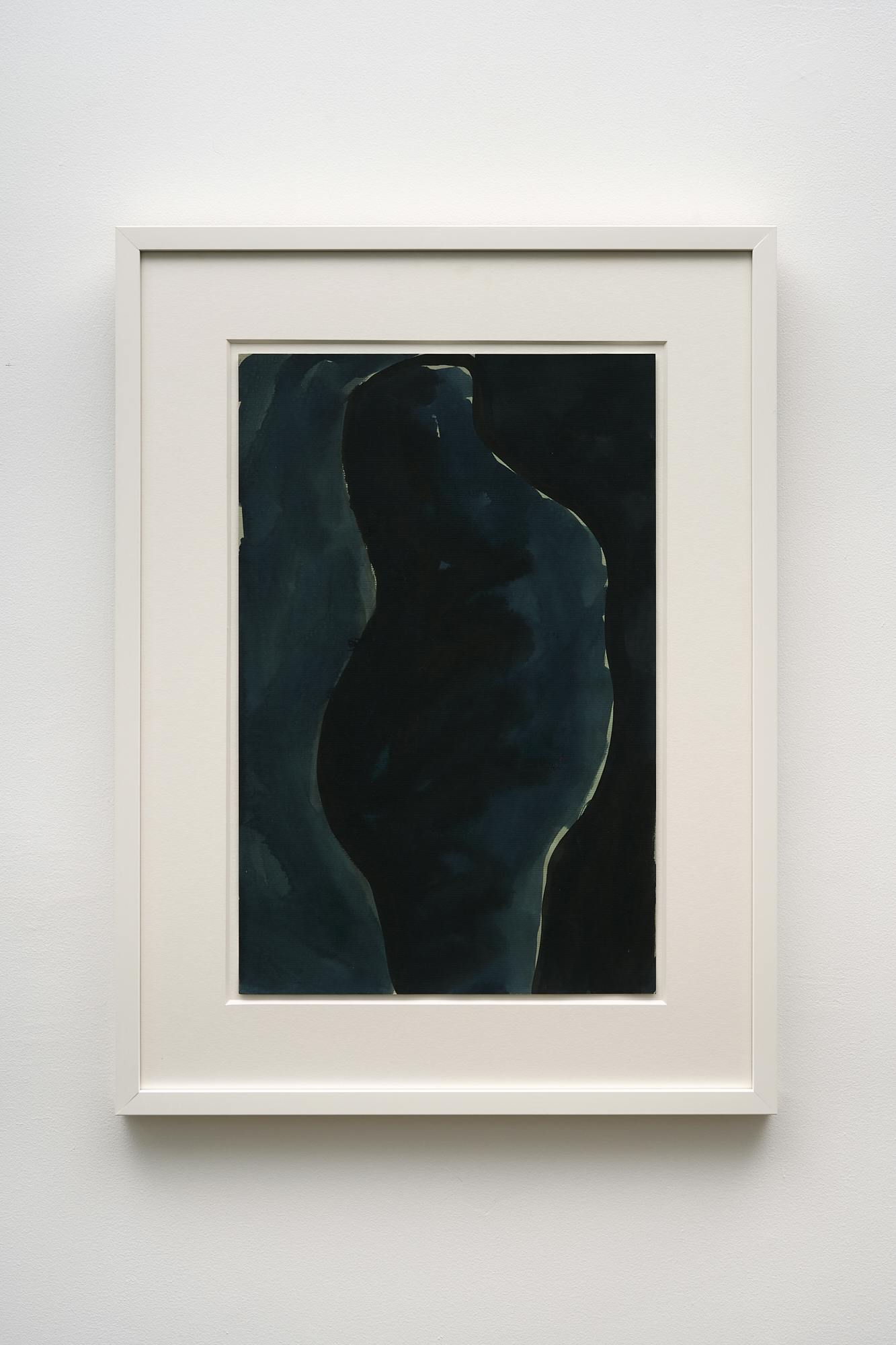
Leslie Bohnenkamp
Untitled (Horsehair), 1981
Watercolor on paper
13 × 19 1/2 in. (33 × 49.5 cm); framed: 21 × 28 in. (53.3 × 71.1 cm)
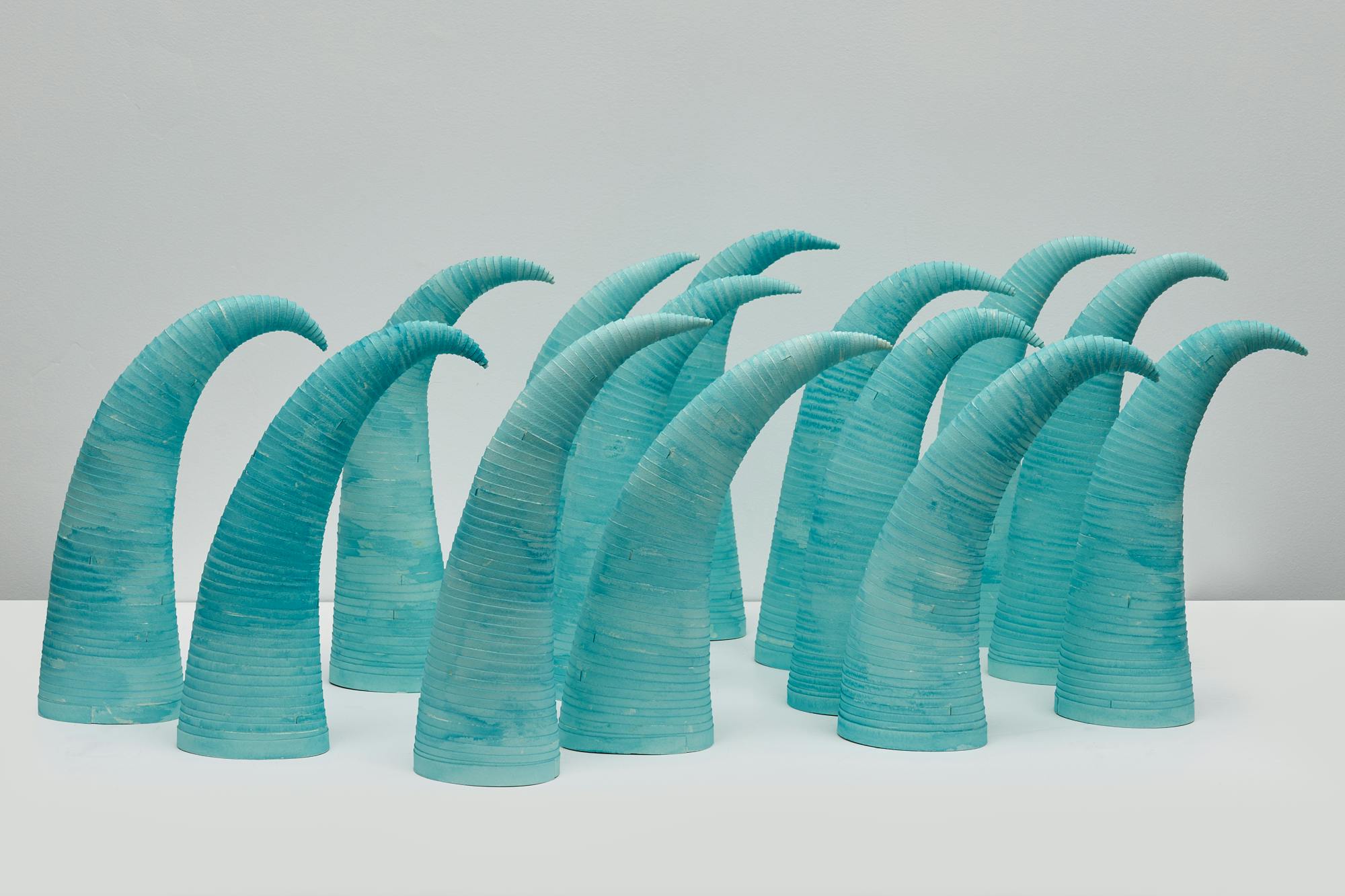
Leslie Bohnenkamp
Blue Ice Herd, c. 1979
Watercolor on coiled paper
Dimensions variable; comprised of 14 sculptures, each approximately 8 × 3 × 12 3/4 in. (20.3 × 7.6 × 32.4 cm)
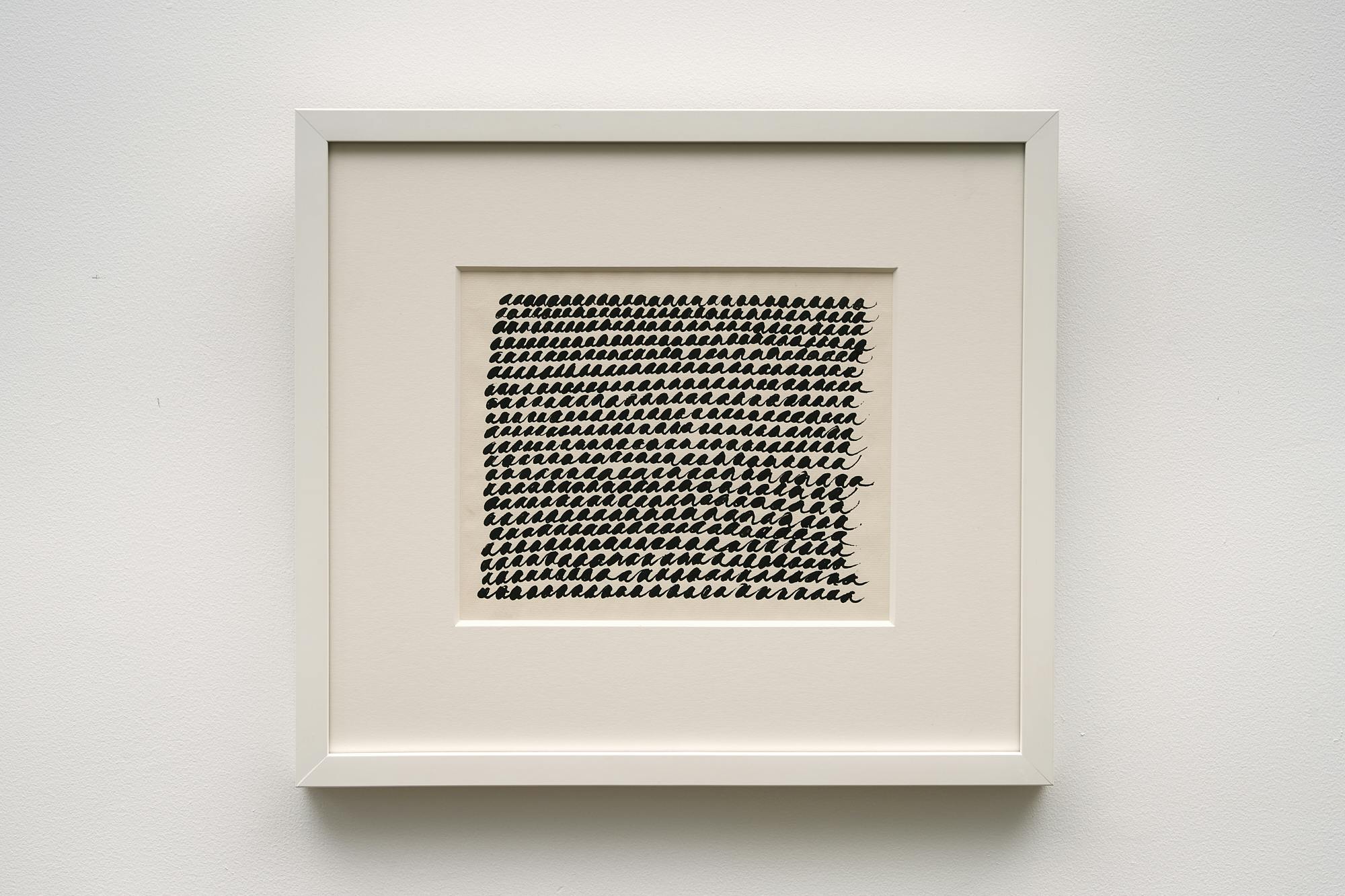
Leslie Bohnenkamp
Textile into Letters, c. 1979
Ink on paper
8 × 10 in. (20.3 × 25.4 cm);
framed: 18 × 16 in. (45.7 × 40.6 cm)
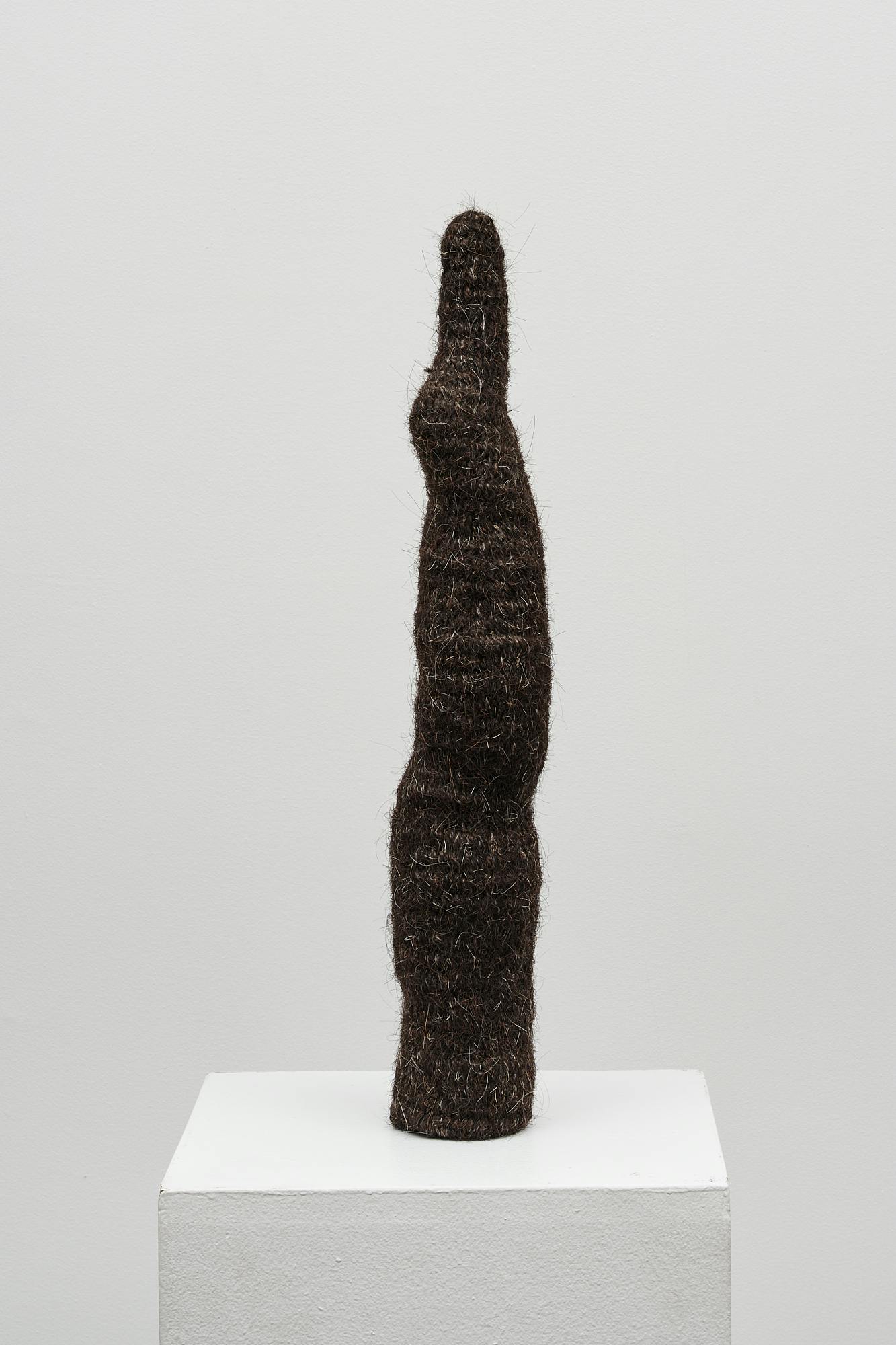
Leslie Bohnenkamp
Coiled, Woven Horsehair Sculpture, 1975
Horsehair
3 × 3 × 21 in. (7.6 × 7.6 × 53.3 cm)
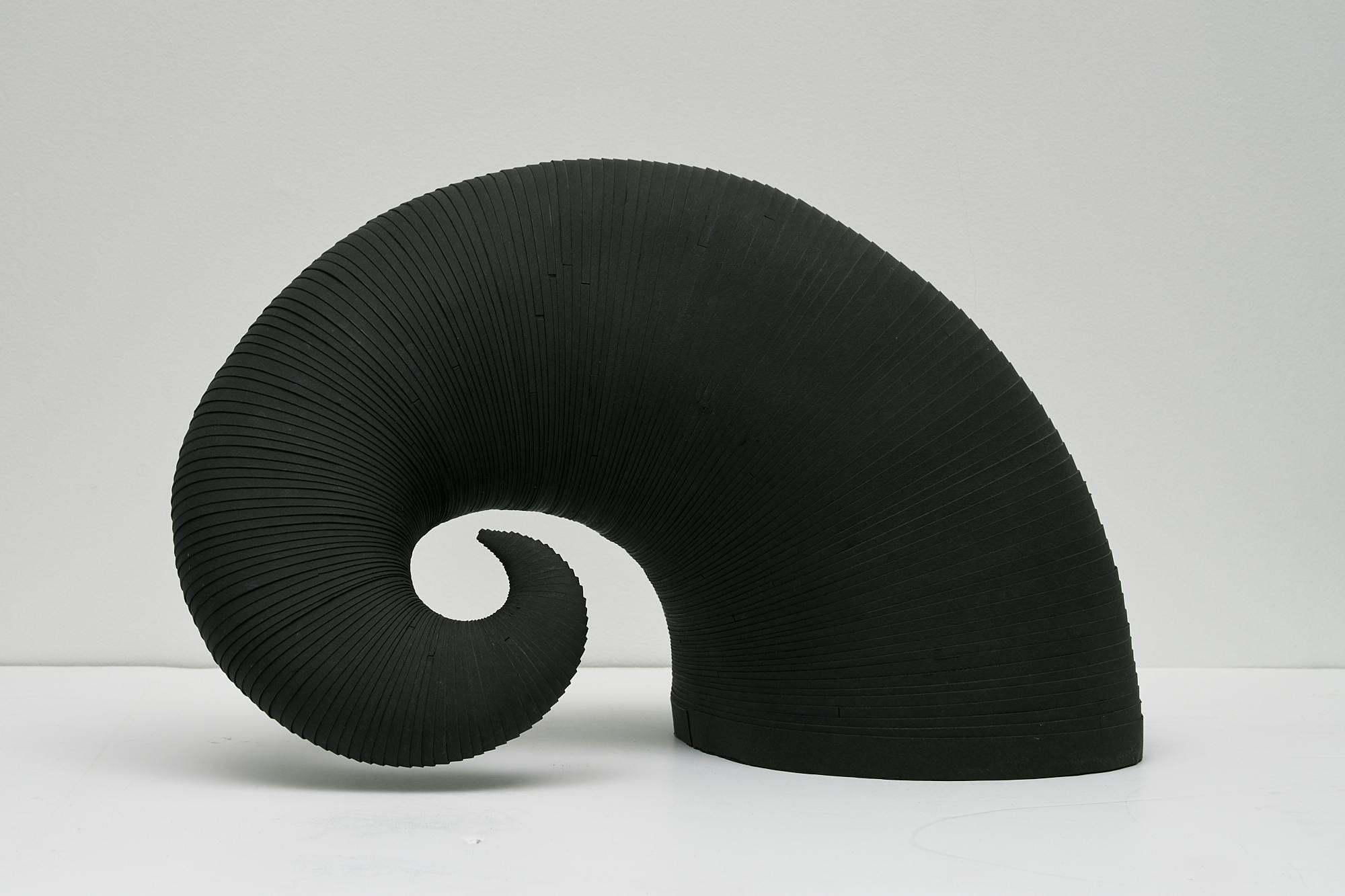
Leslie Bohnenkamp
Coiled Form, c. 1977
Painted, coiled paper
18 × 8 × 13 in. (45.7 × 20.3 × 33 cm)
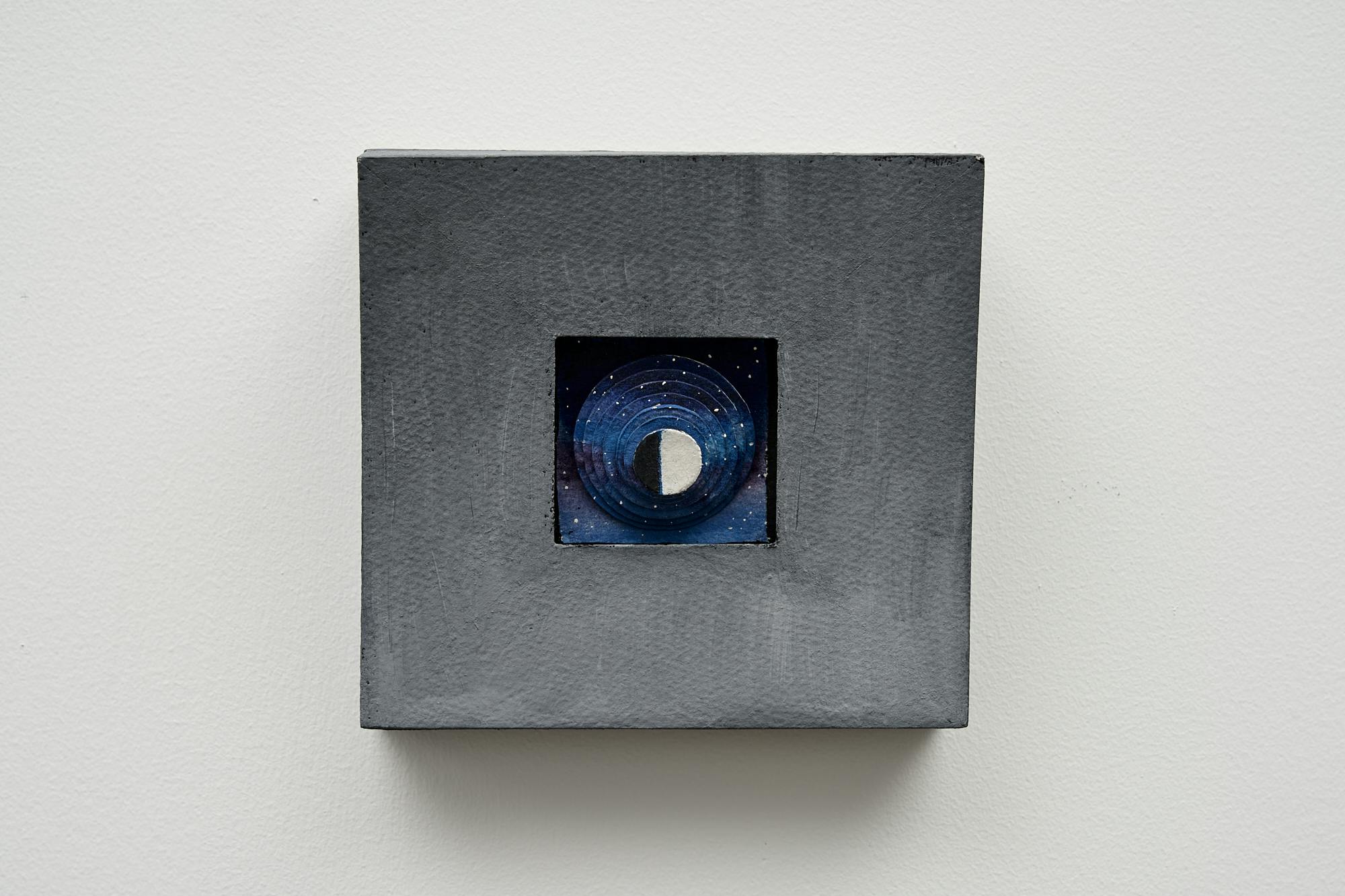
Leslie Bohnenkamp
Night Horizon #3, 1979
Craft paper, wood, and acrylic
6 1/4 × 6 1/4 × 6 1/4 in. (15.9 × 15.9 × 15.9 cm)
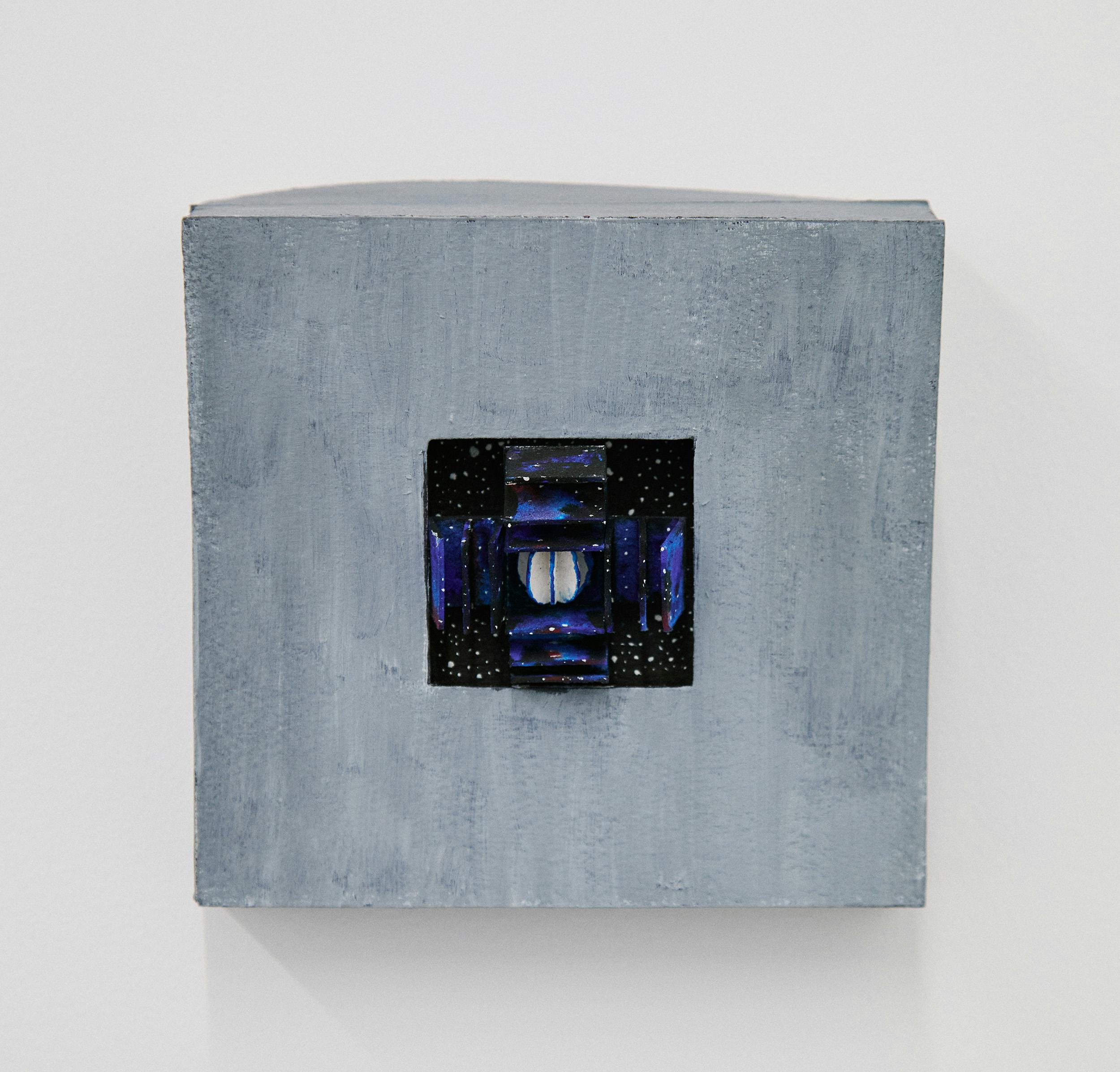
Leslie Bohnenkamp
Night Horizon 2, 1979
Craft paper, wood, and acrylic
6 1/4 × 6 1/4 × 6 1/4 in. (15.9 × 15.9 × 15.9 cm)
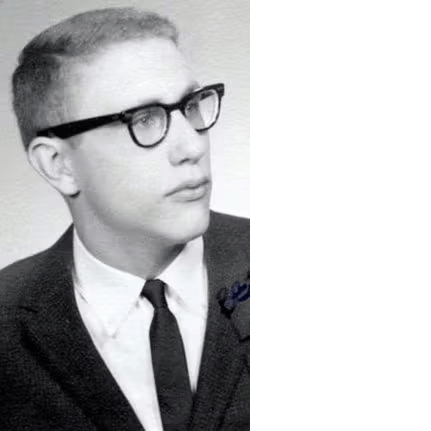
Leslie Bohnenkamp (1943–1997) was an American artist who worked in sculpture and drawing. He studied textile design at the University of Iowa and developed his practice in the 1970s. Bohnenkamp lived and worked between Provincetown and New York and exhibited in New York during the 1970s and 1980s, including at the Betty Parsons Gallery.


